
Rotorwind
Battery-Driven
3 – 5 Year Autonomy
Silent
Since 1996
Mechanism I · Rotorwind
Autonomy, measured in years.
A motor and gearbox bring a weighted cup up to speed; at threshold the drive disengages and the cup freewheels — swinging under gravity as on the wrist.
The Mechanism
A motor, a gearbox, a weighted cup.
A motor and gearbox bring a weighted winding cup up to speed. At threshold, the drive disengages and the cup freewheels — decelerating under inertia, swinging to rest under gravity. The watch experiences the natural, uneven arc of a wrist.
- iDriveMotor and gearbox, engaged in short intervals
- iiReleaseDrive disengages at threshold; cup freewheels under gravity
- iiiAutonomyThree to five years on lithium cells — many times the life of the battery-powered competition
- ivAcoustic signatureEffectively nil — freewheeling is silent
3–5 Years
Single-winder lithium battery autonomy
800–1,300
Turns per day, preset by movement
Weighted Cup
Freewheels after drive cycle
By Comparison
Why Rotorwind behaves differently.
| Consumer winder | Rotorwind | |
|---|---|---|
| Drive | Continuous, direct-drive | Motor + gearbox, intermittent |
| Duty cycle | Always driven | Brief drive; freewheel & gravity |
| Battery life | Alkaline, far shorter | 3–5 years on lithium cells |
| Noise | Audible motor + gearing | Silent during freewheel |
| Service life | Often replaced, not repaired | Measured in decades |
The Catalogue
Winders featuring Rotorwind.
From the Sparta 1, a single-module study in proportion, to the Wallsafe 9 and its architectural scale — each winder below is available with the Rotorwind mechanism.
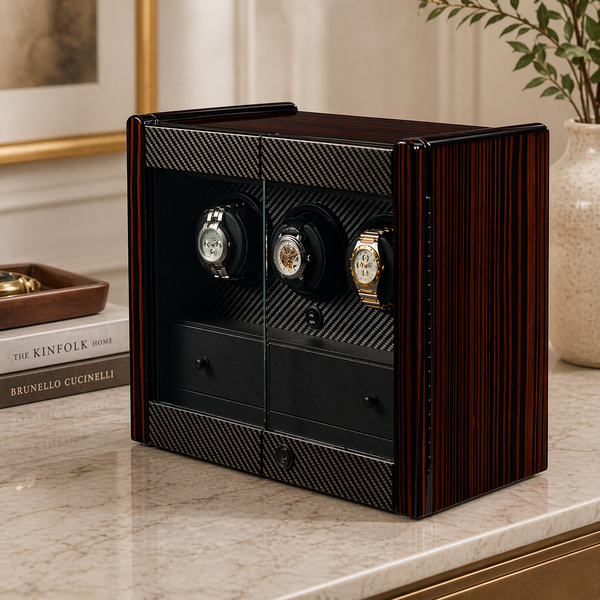
Rotorwind available
Avanti 3
From $2,995.00
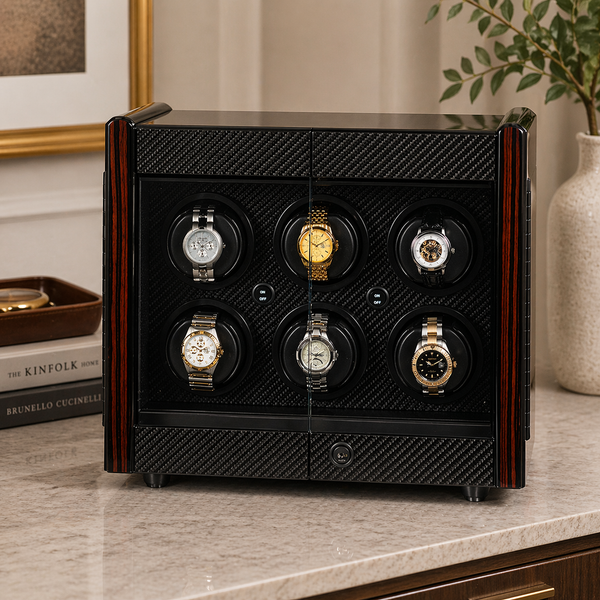
Rotorwind available
Avanti 6
From $5,995.00
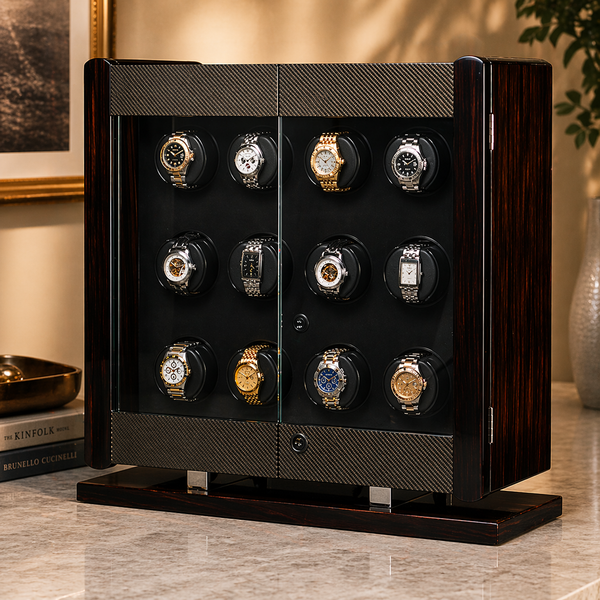
Rotorwind available
Avanti 12
From $12,995.00
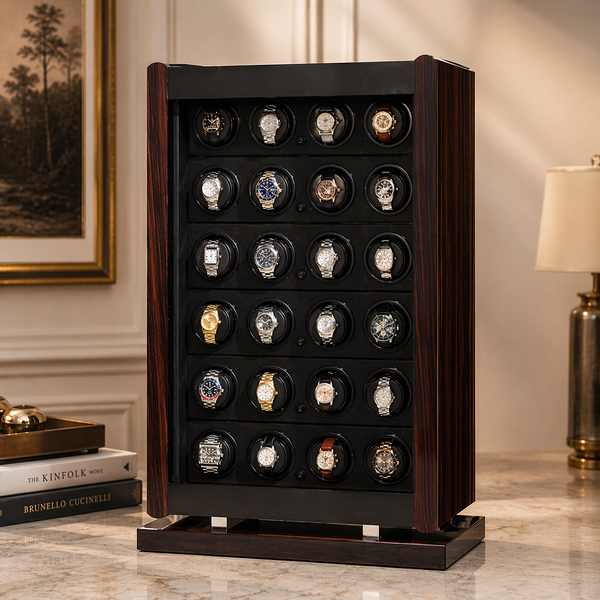
Rotorwind available
Avanti 24
From $29,995.00
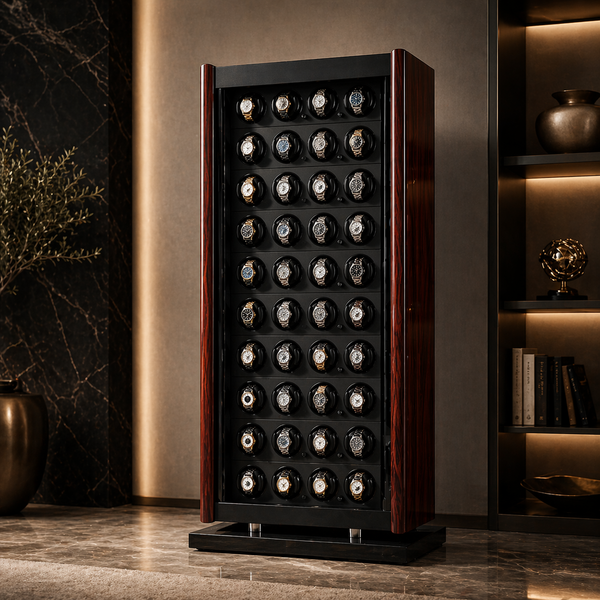
Rotorwind available
Avanti 48
From $49,995.00
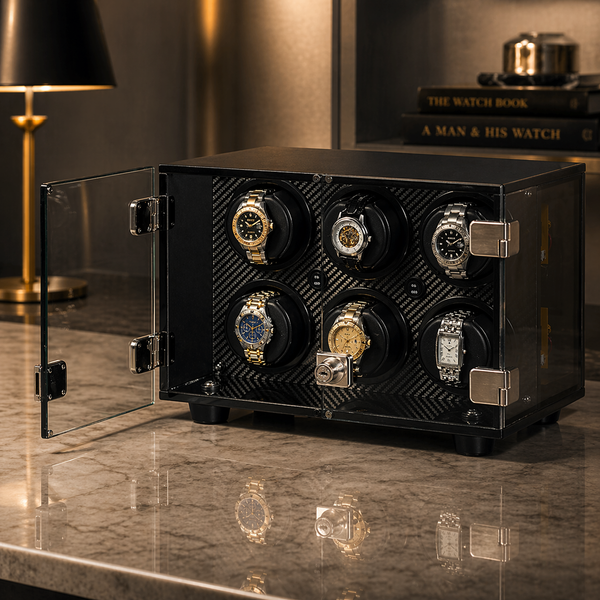
Rotorwind available
Milano 6
From $5,995.00
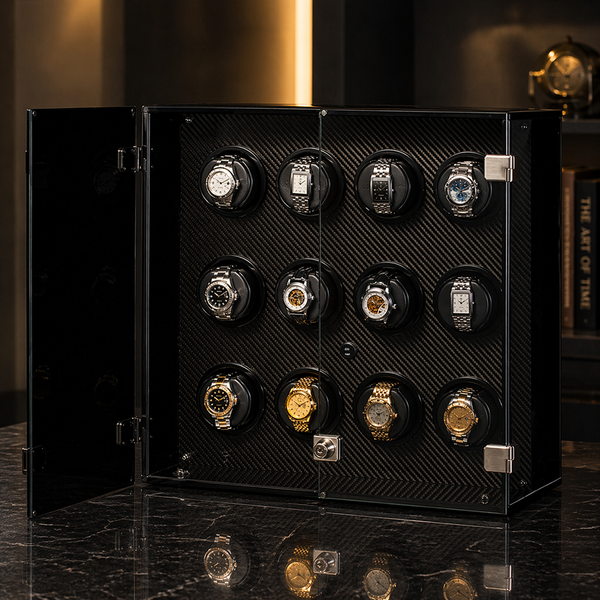
Rotorwind available
Milano 12
From $12,995.00
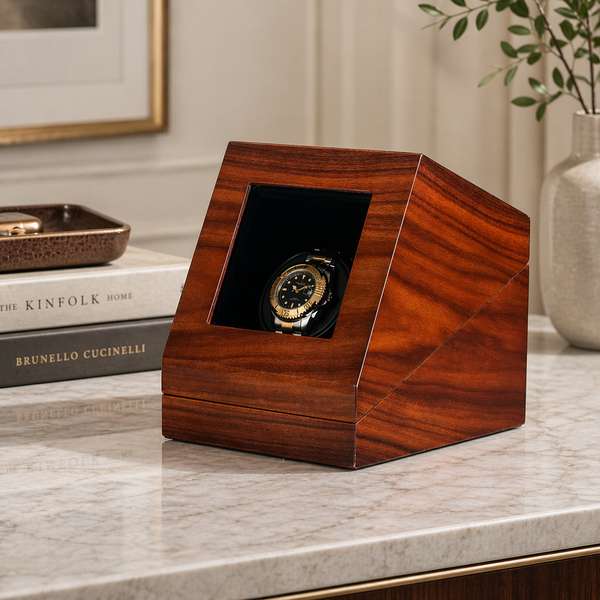
Rotorwind available
Siena 1
From $895.00
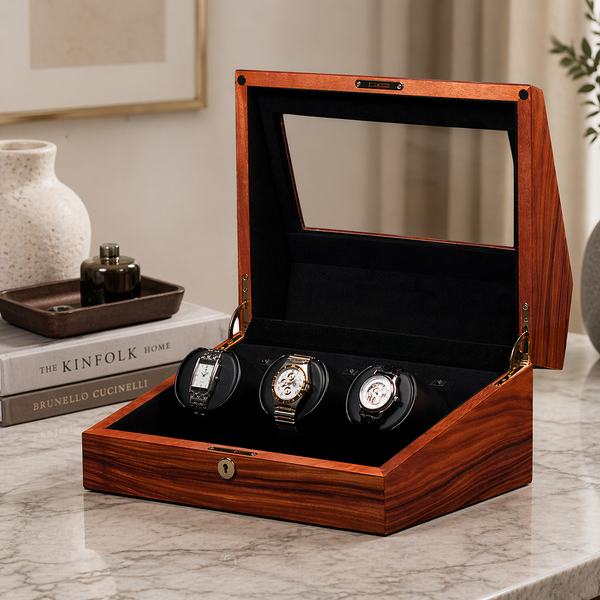
Rotorwind available
Siena 3
From $2,495.00
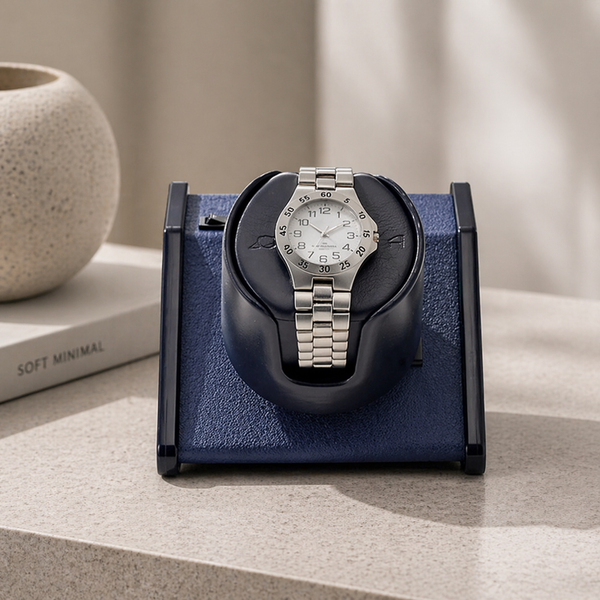
Rotorwind available
Sparta 1 Bold
From $395.00
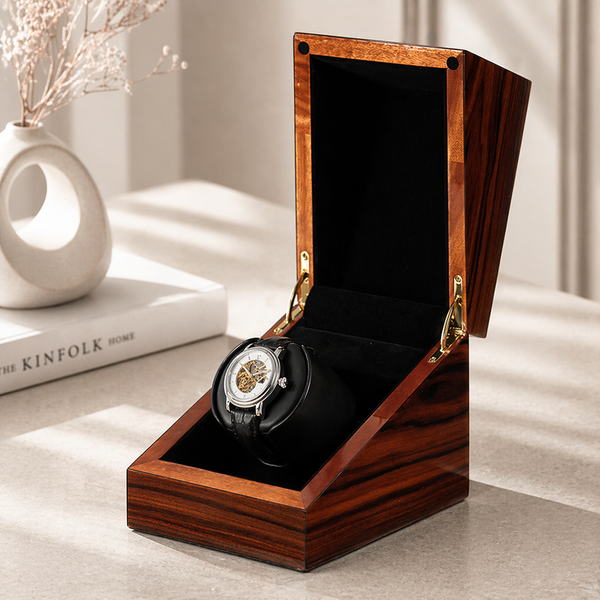
Rotorwind available
Sparta 1 Deluxe
From $695.00
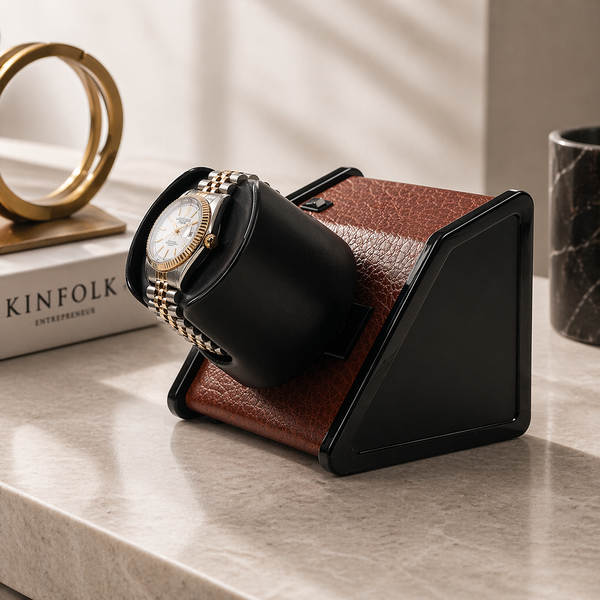
Rotorwind available
Sparta 1 Leatherette
From $395.00
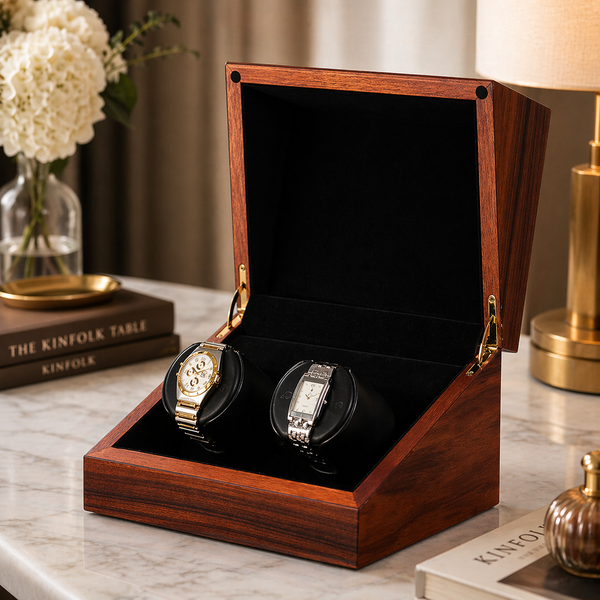
Rotorwind available
Sparta 2 Deluxe
From $1,295.00
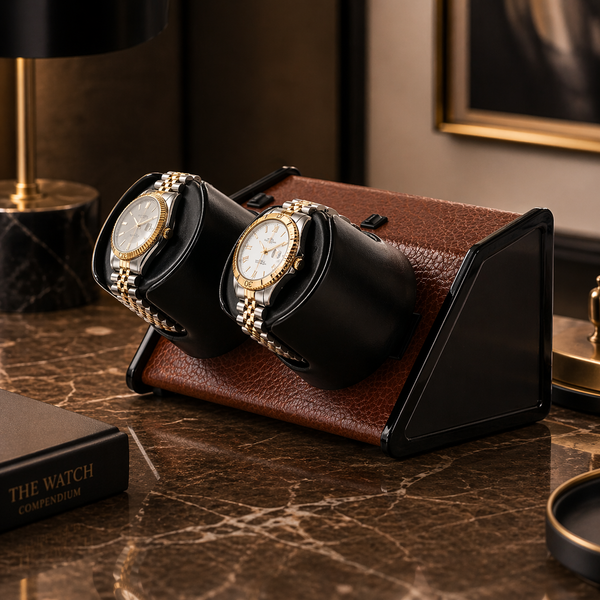
Rotorwind available
Sparta 2 Leatherette
From $695.00
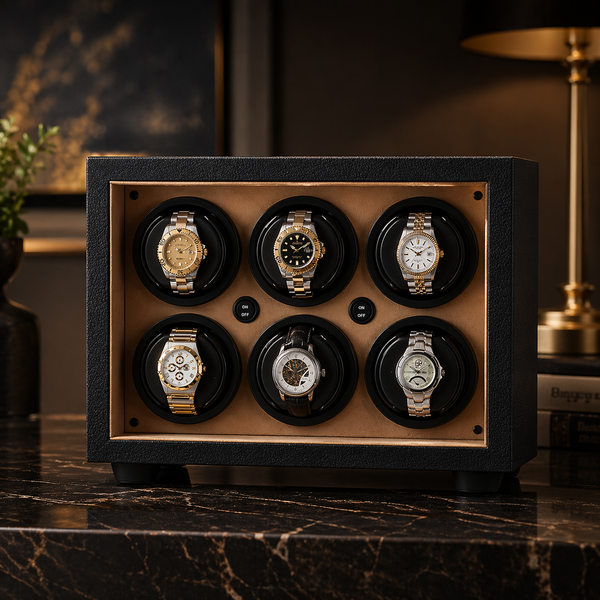
Rotorwind available
InSafe 6
From $3,295.00
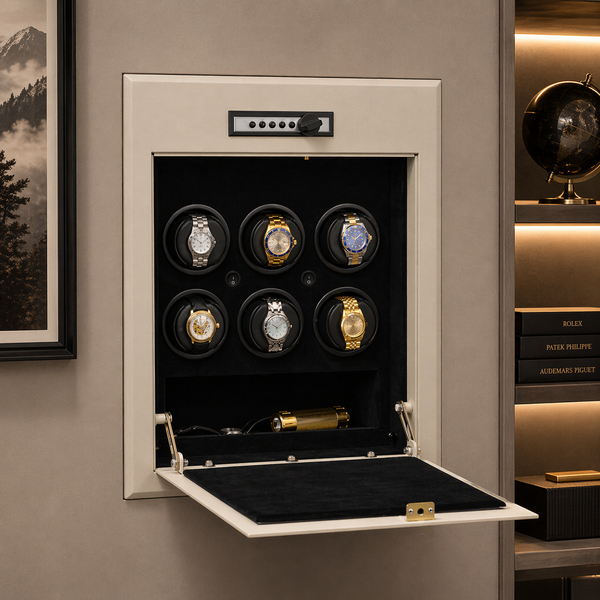
Rotorwind available
Wallsafe 6
From $5,995.00
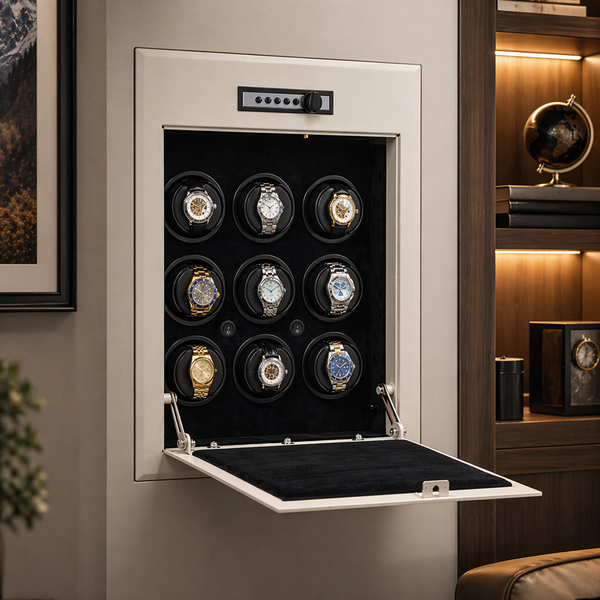
Rotorwind available
Wallsafe 9
From $8,995.00
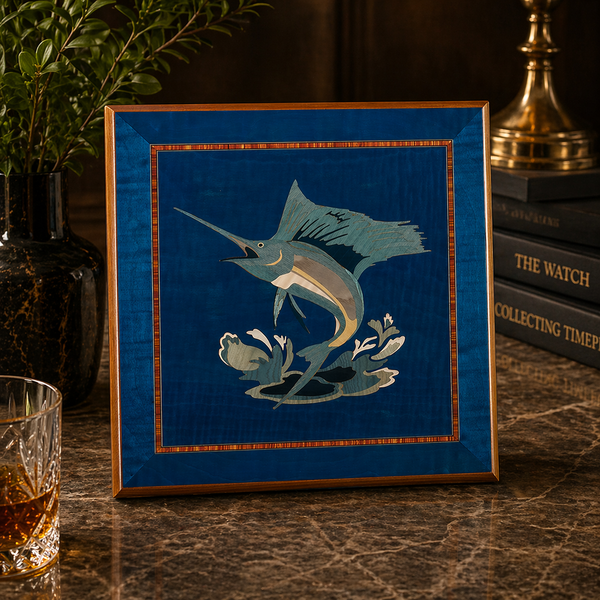
Rotorwind available
Blue Marlin
From $3,995.00

Rotorwind available
Four Aces
From $3,995.00
Every Rotorwind winder is assembled, tested, and serviced in Wilmington, North Carolina.
View the Programmable Mechanism →